
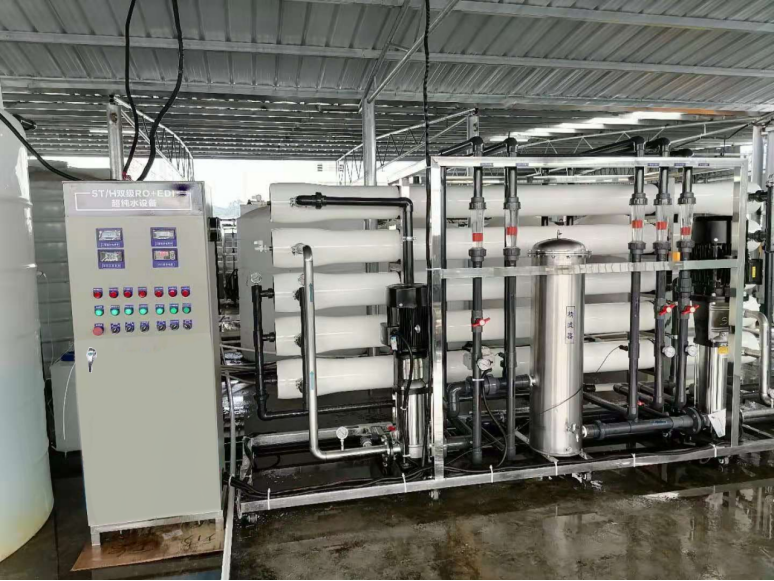
Choosing the Right Core: RO vs. UF in Beverage and Drinking Water Production
In the liquid food and beverage industry, water is more than just an ingredient—it is the foundation of product quality, safety, and taste. For producers of bottled mineral water, fruit juices, and even edible oil processing facilities, selecting the appropriate filtration technology is a critical decision that impacts both the final product profile and long-term operational costs (OPEX). At ShineDew, we specialize in two primary membrane technologies: Reverse Osmosis (RO) and Ultrafiltration (UF). Understanding their distinct roles is key to optimizing your production line.
Reverse Osmosis (RO): The Standard for Absolute Purity
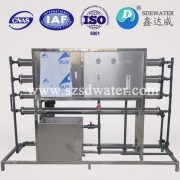
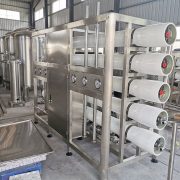
Reverse Osmosis is widely regarded as the gold standard for achieving high-purity water. By utilizing a semi-permeable membrane with incredibly fine pores, RO systems remove up to 99% of dissolved salts (TDS), organic compounds, bacteria, and viruses.
For manufacturers of bottled purified water or reconstituted fruit juices, RO is the indispensable choice. It ensures a “blank canvas” by stripping away minerals that might interfere with the precise flavor profile of a beverage. In regions where raw water has high salinity or hardness, our RO systems provide a stable, consistent feed-water quality that protects downstream equipment—like high-speed fillers and labeling machines—from scaling and corrosion.
Ultrafiltration (UF): Preserving Nature’s Minerals
Unlike RO, Ultrafiltration operates at lower pressures and utilizes membranes with a larger pore size (Molecular Weight Cut-Off). While UF effectively removes suspended solids, colloids, and harmful microorganisms (such as Giardia and Cryptosporidium), it allows essential dissolved minerals like calcium, magnesium, and potassium to pass through.
This makes UF the ideal technology for natural mineral water production. Today’s health-conscious consumers increasingly demand water that retains its natural electrolyte balance. A UF-based production line allows you to market a product that is microbiologically safe while maintaining the “source-origin” mineral profile. Additionally, because UF operates at lower pressures, it typically offers lower energy consumption compared to RO systems.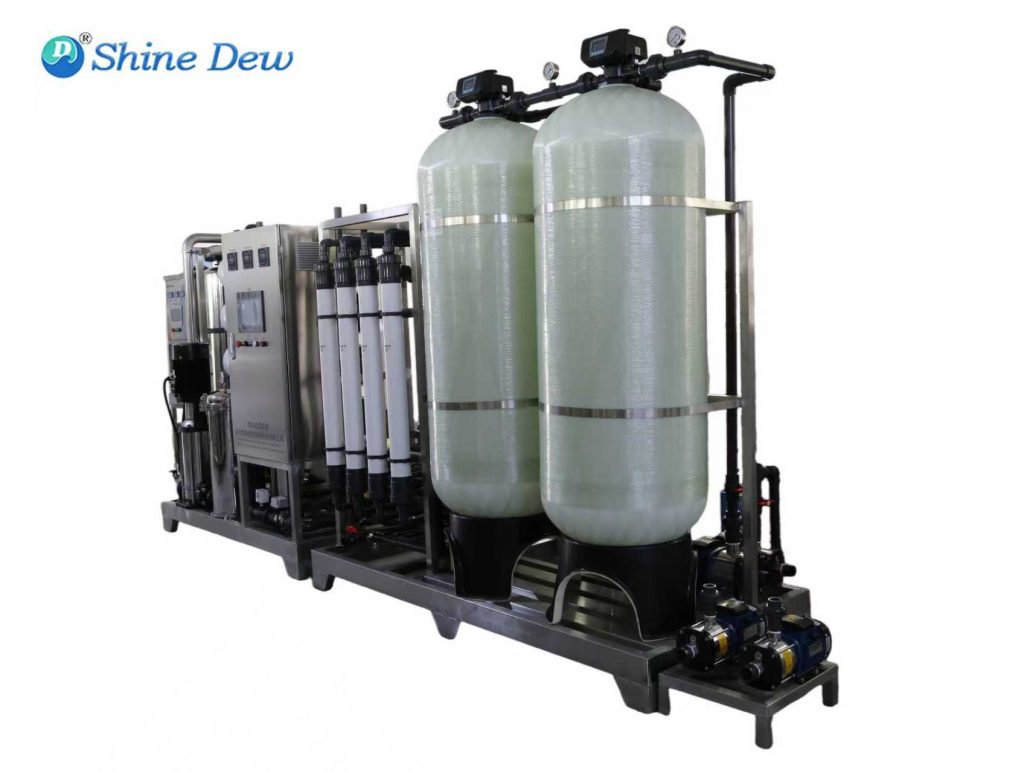
Making the Strategic Choice
The decision between RO and UF should be driven by two factors: your source water analysis and your market positioning.
If your raw water has a high TDS or if you are aiming for a ultra-pure product, RO is the logical investment. If you have high-quality spring water and wish to preserve its natural health benefits, UF provides a high-efficiency, cost-effective solution. In many advanced production lines, we even see these technologies used in tandem—UF as a robust pre-treatment to extend the life of the RO membranes.
At ShineDew, we don’t just supply equipment; we engineer solutions. Whether you are scaling a 1,500 BPH line or managing a massive juice production facility, our technical team is ready to help you calibrate the perfect filtration core for your business.


Leave a Reply
Want to join the discussion?Feel free to contribute!