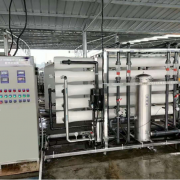
Choosing the Right Core: RO vs. UF in Beverage and Drinking Water Production

In the liquid food and beverage industry, water is more than just an ingredient—it is the foundation of product quality, safety, and taste. For producers of bottled mineral water, fruit juices, and even edible oil processing facilities, selecting the appropriate filtration technology is a critical decision that impacts both the final product profile and long-term operational costs (OPEX). At ShineDew, we specialize in two primary membrane technologies: Reverse Osmosis (RO) and Ultrafiltration (UF). Understanding their distinct roles is key to optimizing your production line.

Reverse Osmosis (RO): The Standard for Absolute Purity
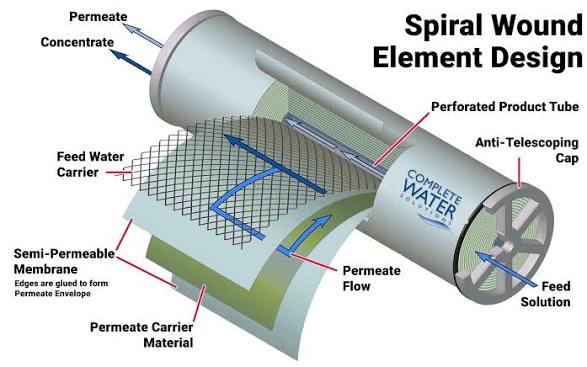
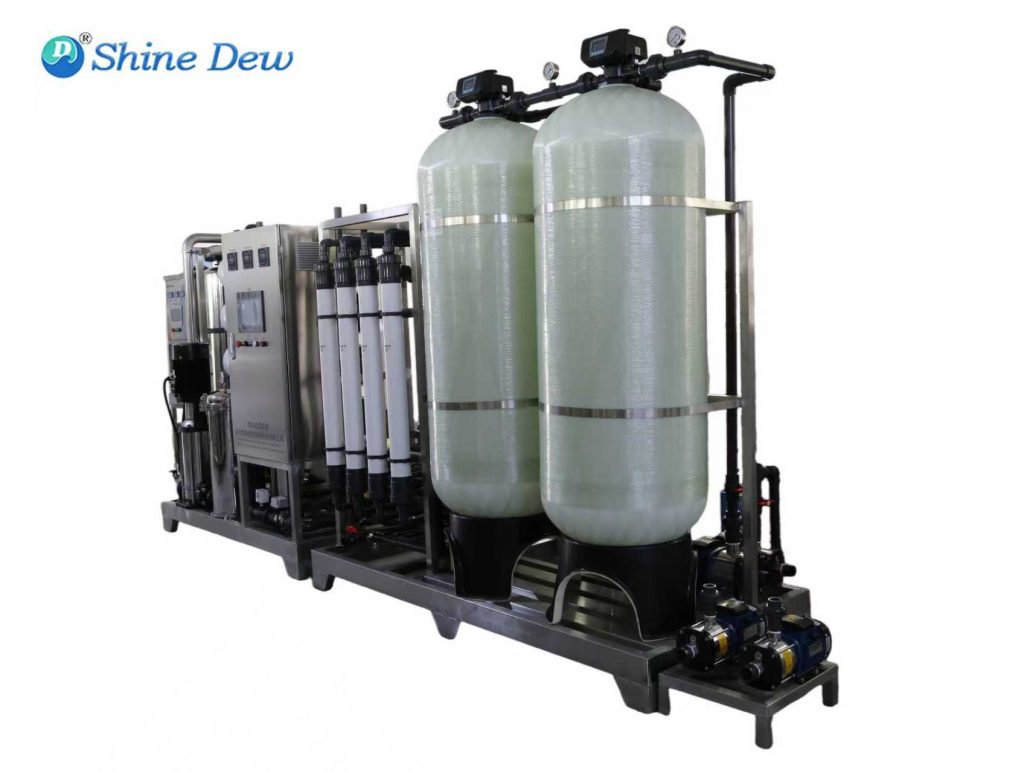
Reverse Osmosis is widely regarded as the gold standard for achieving high-purity water. By utilizing a semi-permeable membrane with incredibly fine pores, RO systems remove up to 99% of dissolved salts (TDS), organic compounds, bacteria, and viruses.
For manufacturers of bottled purified water or reconstituted fruit juices, RO is the indispensable choice. It ensures a “blank canvas” by stripping away minerals that might interfere with the precise flavor profile of a beverage. In regions where raw water has high salinity or hardness, our RO systems provide a stable, consistent feed-water quality that protects downstream equipment—like high-speed fillers and labeling machines—from scaling and corrosion.

Ultrafiltration (UF): Preserving Nature’s Minerals
Unlike RO, Ultrafiltration operates at lower pressures and utilizes membranes with a larger pore size (Molecular Weight Cut-Off). While UF effectively removes suspended solids, colloids, and harmful microorganisms (such as Giardia and Cryptosporidium), it allows essential dissolved minerals like calcium, magnesium, and potassium to pass through.
This makes UF the ideal technology for natural mineral water production. Today’s health-conscious consumers increasingly demand water that retains its natural electrolyte balance. A UF-based production line allows you to market a product that is microbiologically safe while maintaining the “source-origin” mineral profile. Additionally, because UF operates at lower pressures, it typically offers lower energy consumption compared to RO systems.
Making the Strategic Choice
The decision between RO and UF should be driven by two factors: your source water analysis and your market positioning.
If your raw water has a high TDS or if you are aiming for a ultra-pure product, RO is the logical investment. If you have high-quality spring water and wish to preserve its natural health benefits, UF provides a high-efficiency, cost-effective solution. In many advanced production lines, we even see these technologies used in tandem—UF as a robust pre-treatment to extend the life of the RO membranes.
At ShineDew, we don’t just supply equipment; we engineer solutions. Whether you are scaling a 1,500 BPH line or managing a massive juice production facility, our technical team is ready to help you calibrate the perfect filtration core for your business.

Precision and Versatility: Choosing the Right Labeling Technology for Beverage and Oil Production

In the competitive landscape of liquid consumables—ranging from crystal-clear mineral water and pulpy juices to premium edible oils—the label is more than just a piece of film; it is the “identity card” of the brand. For production managers, achieving maximum Return on Investment (ROI) requires balancing aesthetic appeal with mechanical efficiency. Depending on the product type, bottle shape, and production speed, different labeling technologies offer distinct advantages. At ShineDew, we provide a diverse range of solutions to ensure your packaging line is optimized for your specific liquid product.

Hot Melt Glue Labeling: The High-Speed Standard for Mass Production
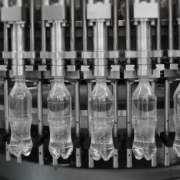
For large-scale mineral water and carbonated beverage plants, speed and cost-per-unit are the primary drivers. Rotary Hot Melt Glue Labeling Machines are the undisputed kings of efficiency in this sector. Utilizing cost-effective BOPP or OPP film rolls, these machines apply labels at incredible velocities, synchronized perfectly with high-volume 500ml or 1.5L filling lines.
The advantage of hot melt technology lies in its precision and economy. It uses minimal adhesive while providing a strong, moisture-resistant bond—essential for bottled water that might face condensation in cold storage. For edible oil producers, hot melt labeling also provides a clean, professional finish that remains stable even in high-temperature warehouse environments.

Self-Adhesive Labeling: The Premium Choice for Juices and Specialty Oils
When brand image and “shelf-pop” are the priorities, Self-Adhesive (Pressure-Sensitive) Labeling Machines are the preferred choice. This technology is widely used for premium fruit juices and high-end edible oils (such as extra virgin olive oil).
The primary benefit of self-adhesive labeling is its versatility. It allows for a “no-label look” using transparent films, giving the consumer a clear view of the vibrant juice or the golden oil inside. These machines are highly flexible, capable of applying front, back, or wrap-around labels with surgical precision. While the material cost per label is higher than OPP film, the visual appeal and the ability to handle various bottle materials (PET, glass, or HDPE) make it a high-ROI choice for premium market segments.

Shrink Sleeve Labeling: 360-Degree Branding for Complex Contours
For beverages and juices with unique bottle shapes, Shrink Sleeve Labeling Machines offer unparalleled creative freedom. Unlike flat labels, a sleeve is placed over the bottle and passed through a steam or electric heat tunnel, where it shrinks to perfectly contour the container’s shape.
This technology provides 360-degree branding real estate, allowing for vibrant graphics from the cap to the base. In the beverage industry, shrink sleeves are also used for tamper-evident seals on bottle caps, ensuring product safety and integrity. For producers of sports drinks or ergonomic juice bottles, the shrink sleeve ensures that the branding remains intact and attractive regardless of the bottle’s complexity.

Integrating the Right Solution for Long-Term Efficiency
Choosing the right labeling technology is not just about the machine; it is about the entire production ecosystem. A high-speed juice line might require the artistic touch of a shrink sleever, while a mass-market mineral water line demands the raw throughput of a hot-melt system.
By integrating these specialized labeling solutions, producers can significantly reduce downtime, minimize material waste, and ensure that every bottle—whether it contains water, juice, or oil—leaves the factory in perfect condition. Automation in labeling is the final, vital step in turning a liquid product into a market-leading brand.

Beyond Fillers: How Automation Synchronizes High-Speed Beverage and Bottled Water Production Lines

In the modern food and beverage industry, efficiency is the lifeblood of profitability. Whether you are producing 500ml mineral water bottles, fresh fruit juices, or large-capacity edible oils, the performance of your packaging line dictates your market competitiveness. Today’s producers face a double challenge: maintaining absolute hygiene standards while maximizing throughput. To meet these demands, the industry is moving away from standalone machines and embracing fully synchronized, automated production lines.

At ShineDew Machinery, we understand that producing a premium beverage requires more than just high-quality liquids. It requires a flawless container preparation and packaging process. From the initial cleaning of returnable containers to the final precision labeling of consumer bottles, automation is the key to scaling your business.

The 5-Gallon Challenge: Perfecting the Pre-Refill Hygiene

For water plants specializing in 5-gallon carboys for drinking water, the return and reuse of empty bottles are central to the business model. However, these bottles often return from the market with dust, scuffs, and outdoor residues. Hand-scrubbing them is not only labor-intensive but also inconsistent in quality.
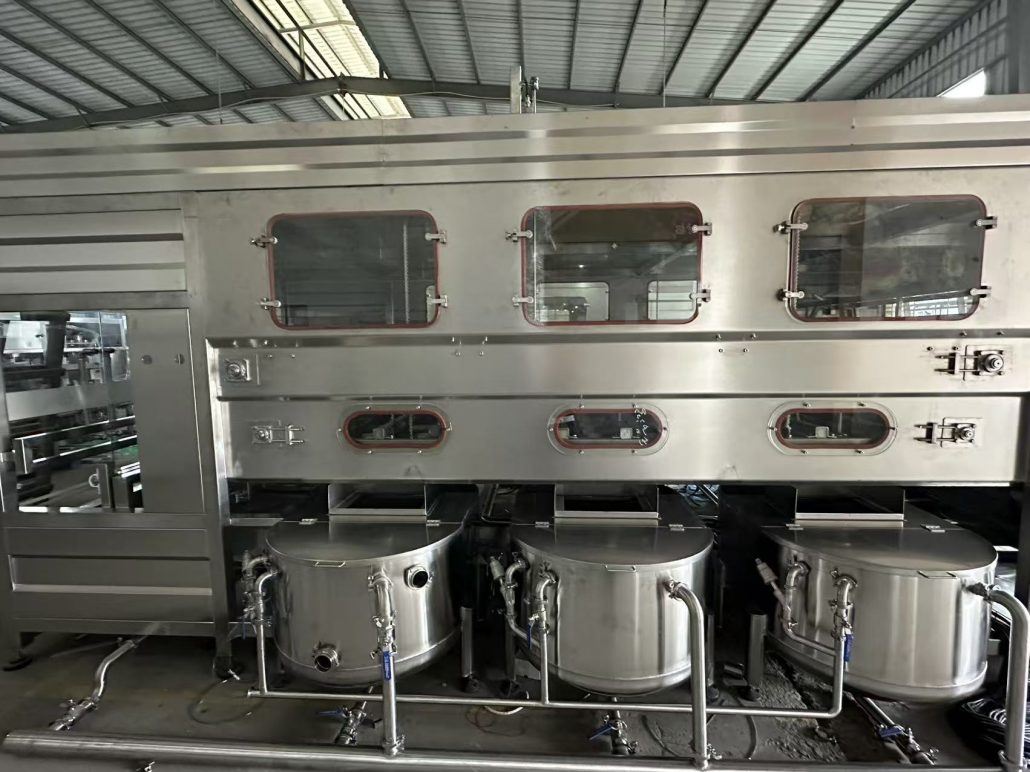
This is where automation steps in to save the day. Our 5-gallon semi-automatic external brushing machine is specifically designed to handle this bottleneck. By integrating this machine at the front end of the line, operators can quickly feed returned bottles into a system of high-speed rotary brushes.
The machine uses targeted water sprays and mechanical friction to strip away external grime without damaging the food-grade plastic of the bottle. This ensures that every 5-gallon container is pristine on the outside before it enters the sterile filling chamber. By bridging the gap between manual labor and full automation, this machine significantly boosts the efficiency of the entire refilling line.

High-Speed Precision: The Art of Hot Melt Glue Labeling

Once the product—be it pure mineral water, pulpy juice, or golden edible oil—is safely filled and capped, the final challenge is branding. In high-volume production lines for 500ml or 1L bottles, labeling can become a major chokepoint if not handled by high-speed machinery.
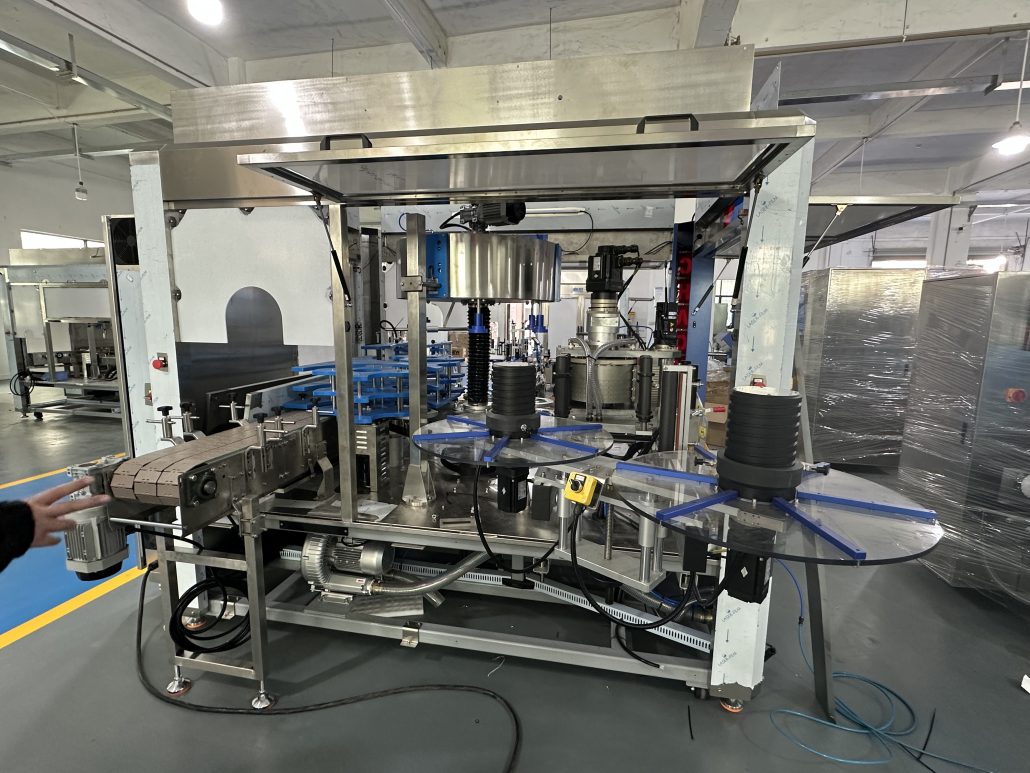
Enter the Rotary Hot Melt Glue Labeling Machine. Witnessing this machine in action on a massive 500ml water line is a testament to modern engineering. Operating at breakneck speeds, the machine applies OPP or pearl film labels to bottles with micro-millimeter precision.
Why use hot melt glue for beverages and oils? First, it creates an incredibly strong, moisture-resistant bond, which is perfect for cold beverages that may develop condensation later. Second, it is highly cost-effective, using minimal glue per application compared to self-adhesive stickers. Most importantly, it handles high throughput effortlessly, ensuring that the labeling speed perfectly matches your filling speed, eliminating any backlog.

The Power of Integration

The ultimate goal for any water or beverage factory is seamless integration. When your pre-washing equipment, filling blocks, and labeling machines communicate and operate at synchronized speeds, efficiency skyrockets.
By investing in automated equipment tailored specifically for food and liquid consumption lines, producers can achieve lower operational costs, eliminate human error, and guarantee that their products hit the shelves looking as pure and premium as the liquid inside.

Optimizing Performance: A Comprehensive Guide to Extending the Service Life of Industrial RO Membranes

In the realm of industrial water treatment, the Reverse Osmosis (RO) membrane is often referred to as the “heart” of the system. Whether in seawater desalination, power plant boiler feed water, or wastewater reuse, the efficiency of these membrane elements directly dictates the operational expenditure (OPEX) of the entire facility. However, many operators face the challenge of premature flux decline and frequent replacements. Extending the service life of industrial RO membranes is not merely about reactive cleaning; it is a systematic discipline that begins with meticulous pre-treatment and ends with disciplined operational monitoring.

The first line of defense is undoubtedly the pre-treatment system. Most membrane failures are rooted in inadequate feed water quality. Monitoring the Silt Density Index (SDI) is paramount; an SDI15 value exceeding 5 is a precursor to rapid colloidal fouling. For instance, a chemical fiber plant we collaborated with in Southeast Asia initially struggled with high replacement costs. Upon investigation, we found that their multi-media filters were bypassing fines during backwash cycles. By optimizing the coagulation dosage and ensuring the SDI remained consistently below 3, the plant extended its membrane lifespan from 18 months to over 3.5 years. This highlights that the longevity of an RO element is often determined before the water even touches the membrane surface.

Beyond physical filtration, chemical stability within the system is crucial. Scaling, particularly from calcium carbonate or sulfate, occurs when the concentration of salts exceeds their solubility limits. Utilizing high-quality anti-scalants and maintaining the correct pH levels are essential. Furthermore, operators must be vigilant against “chemical oxidation.” Residual chlorine from the disinfection stage can cause irreversible damage to the polyamide layer of the membrane. Implementing a robust dechlorination process using sodium bisulfite or activated carbon filters is non-negotiable for preserving the structural integrity of the membrane.

Operational parameters such as cross-flow velocity and recovery rates must also be managed with precision. Operating a system at a recovery rate higher than its design specification may seem efficient in the short term, but it significantly increases the risk of concentration polarization. This phenomenon leads to a higher concentration of solutes at the membrane surface, accelerating both scaling and organic fouling. We recommend a “Normalization” approach to data tracking. By comparing current flow and salt rejection against the initial baseline—adjusted for temperature and pressure—operators can identify performance drifts early.

Finally, the timing of Clean-in-Place (CIP) is a decisive factor. A common mistake is waiting for a 20% or 30% drop in normalized permeate flow before initiating cleaning. By that stage, the foulants are often compacted, making them nearly impossible to remove completely. The industry gold standard is to perform a CIP when the normalized flow decreases by 10%, the differential pressure increases by 15%, or the salt passage increases by 10%. Proactive maintenance, rather than emergency intervention, ensures that the membrane remains an asset rather than a liability, ultimately driving down the total cost of water for the enterprise.