The Evolution of Bottled Water Production: From Manual Labor to Smart Manufacturing

The development of the bottled water industry represents a continuous trajectory of technological innovation focused on enhancing efficiency, safety, and convenience. Each phase of advancement—from rudimentary manual processes to today’s fully automated intelligent production lines—has fundamentally redefined industry standards and operational paradigms.

The Manual Era: Constraints of Efficiency and Hygiene

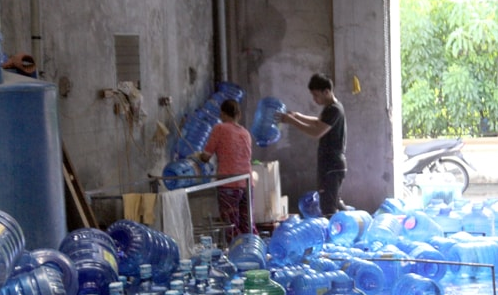
In the earliest phase, bottled water production was largely a manual operation. Tasks such as bottle washing, filling, and capping were performed by hand, resulting in limited output, inconsistent product quality, and significant challenges in maintaining hygienic conditions. Direct human handling of water and containers introduced variability and elevated contamination risks. During this period, bottled water remained a niche product with limited accessibility.

Mechanization: The First Leap in Productivity
By the mid-20th century, the introduction of basic machinery marked the industry’s first major shift. Conveyor belts, semi-automatic fillers, and capping machines began to replace repetitive manual tasks, increasing production speed and enabling bottled water to reach broader markets. However, processes remained discontinuous, requiring manual transfer between stages, and quality control still relied heavily on operator experience.

Automation Integration: The Rise of the Production Line
The adoption of Programmable Logic Controller (PLC) technology in the 1970s–1980s became a pivotal turning point. Washing, filling, and capping were integrated into coordinated production lines, enabling sequential automation. Sensors monitored bottle positioning and fill levels, while mechanical actuators performed precise operations. This integration significantly boosted throughput, consistency, and hygiene, laying the foundation for standardized mass production and driving down costs.

The Intelligent Revolution: Toward Unmanned Operation
Since the early 21st century, advances in industrial IoT, machine vision, and robotics have ushered in an era of intelligent production. Modern lines now operate as seamless, closed-loop systems:

  • Upstream: Blow-molding units produce PET bottles on demand.

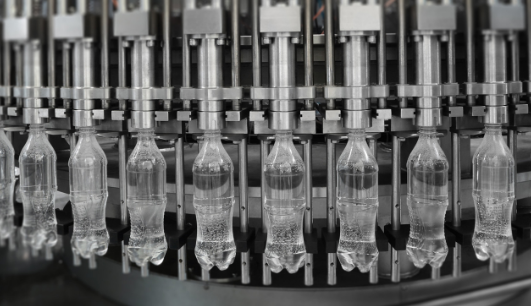
  • Midstream: Three-in-one fillers conduct rinsing, volumetric filling, and sealing in a controlled environment, with vision systems performing real-time inspection.

  • Downstream: Automated labelers, coders, wrappers, and palletizers handle packaging and logistics with minimal human intervention.

Today, a state-of-the-art bottled water plant can operate with near-total autonomy—from raw material intake to palletized dispatch—embodying the concept of a “lights-out” factory. Personnel have transitioned from line operators to system supervisors and maintenance specialists.

The journey from manual handling to robotic precision mirrors the broader evolution of manufacturing toward intelligence, flexibility, and sustainability. As technologies such as digital twins and predictive analytics mature, future bottled water plants will become even more adaptive, resilient, and efficient—continuing to deliver safe, reliable drinking water to a global market.

Streamlining Bottled Water Production: The Integrated Linear Filling Solution

How do modern bottling plants efficiently handle large containers like 3 to 5-gallon bottles while ensuring strict hygiene and consistent output? The challenge lies in optimizing the core process of washing, filling, and sealing within a compact and reliable system.

An integrated linear-type filling machine addresses this by combining these three essential steps into a single, continuous automated line. Specifically designed for larger PET bottles ranging from 3 to 10 liters, this solution is suitable for still beverages such as purified water and mineral water. Its primary advantage is creating a more enclosed production flow, which significantly reduces the product’s exposure to the external environment. This design directly supports improved hygiene standards and operational consistency.

The machine employs a suspended bottle-conveying structure. This design simplifies the process of changing over to different bottle sizes or shapes, making adjustments faster and less labor-intensive. Operation is managed by an advanced programmable logic controller (PLC), with a user-friendly touchscreen interface for monitoring and control. In terms of construction, surfaces in contact with the product are made of grade stainless steel to meet food safety requirements, while reliable international components are used in the electrical system for durability.

Beyond bottled water, this versatile platform can also handle various non-carbonated liquids. By integrating washing, filling, and capping into one synchronized unit, it helps producers minimize floor space, reduce potential contamination points, and maintain a steady production pace for large-format containers.

We focus on providing practical and robust automation solutions for the beverage industry, designing equipment that prioritizes operational hygiene, ease of use, and dependable performance in demanding production environments.

Streamline Your Water Package with Automated Barrel Bagging

Have you ever wondered how those 5-gallon water barrels used in homes and offices are packaged for hygiene and convenience? The packaging method plays a crucial role in keeping the water clean during storage and transport.

Common packaging solutions for large water barrels include cardboard sleeves, shrink wrapping, and plastic bag covering. Among these, bag covering—often made from food-grade polyethylene—has become the preferred choice for many water suppliers. It provides a sanitary, dust-proof, and cost-effective way to protect the barrel mouth and shoulders, ensuring the water remains safe from contamination until it reaches the end user.

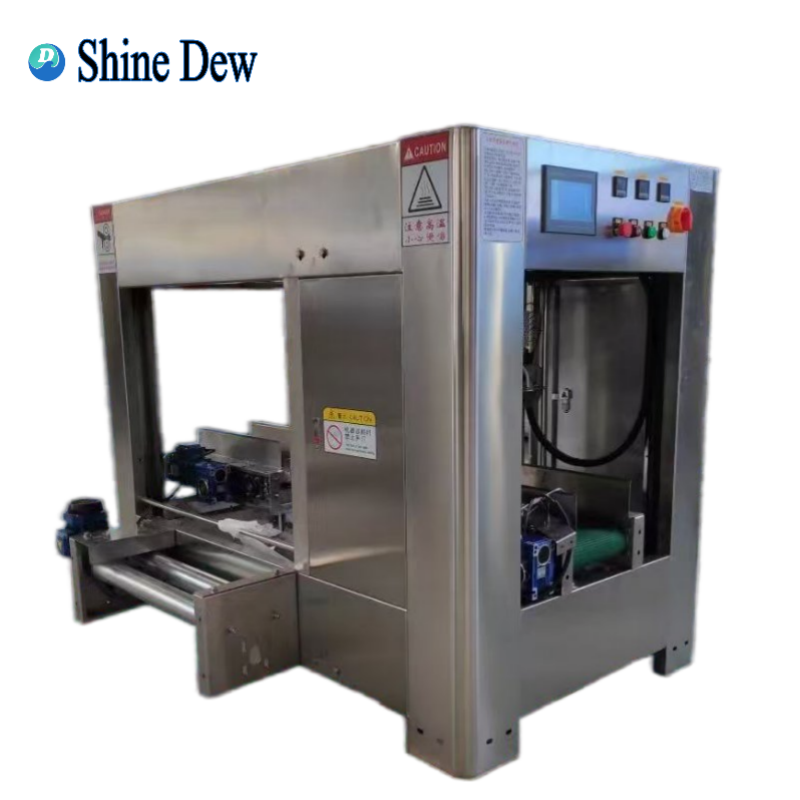
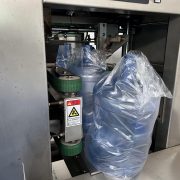
To meet the growing demand for efficient and consistent packaging, automated bagging machines have been developed. These systems are designed specifically for 5-gallon water barrels, integrating feeding, bag placement, sealing, and discharging into one seamless process. Built with food-grade stainless steel, the machine ensures compliance with hygiene standards while offering durability and easy cleaning.

Equipped with a programmable logic controller (PLC) and servo-driven sealing mechanism, the system operates smoothly, with minimal noise and energy consumption. Sensors accurately detect barrel position, while a user-friendly touchscreen interface allows for simple operation and monitoring. The entire process is enclosed, reducing manual contact and maintaining a clean packaging environment.

This type of automatic bagging machine is ideal for water bottling plants, distribution centers, and large office hydration services. It not only speeds up the packaging process but also helps reduce labor costs and maintain consistent packaging quality. Whether for still or sparkling water barrels, the system offers a reliable solution that supports both efficiency and sanitation.

At our company, we focus on providing practical and well-engineered solutions for the drinking water industry. Our equipment is designed with simplicity, stability, and hygiene in mind, helping businesses streamline their operations while ensuring product integrity from production to delivery.